OHLA FACULTY FELLOWS PROPOSAL APP 2019; DICK, WESLEY—ALBION COLLEGE
Funding Proposal: Faculty Directed Oral History Project
Project Title: “Albion, Michigan Public Schools: Black Teachers Matter—A History”
Faculty Director: Wesley Arden Dick, Professor of History
Host Institution: Albion College
Background
Albion, Michigan, a small town, was founded in the 1830s. Its location at the confluence of the north and south forks of the Kalamazoo River attracted early settlers because the water flow at the site could power grist and lumber mills. Mills were a defining economic presence for Albion during its pioneer phase. After the Civil War, heavy industry was initiated and by 1900, Albion had become an industrial city. The Albion Malleable Iron Company was considered the “mother factory,” and it attracted and recruited immigrant workers who entered America through Ellis Island. When the Great War broke out in Europe in 1914, immigration from Europe was curtailed. In need of workers, the Albion Malleable Iron Company went south to Pensacola, Florida. The company recruited 64 men who traveled by train to Albion in November of 1916. Their families soon joined them. Albion had become a host of the fabled Great Migration of African Americans from the South to the North. In subsequent years, more African Americans made the journey from the South to Albion.
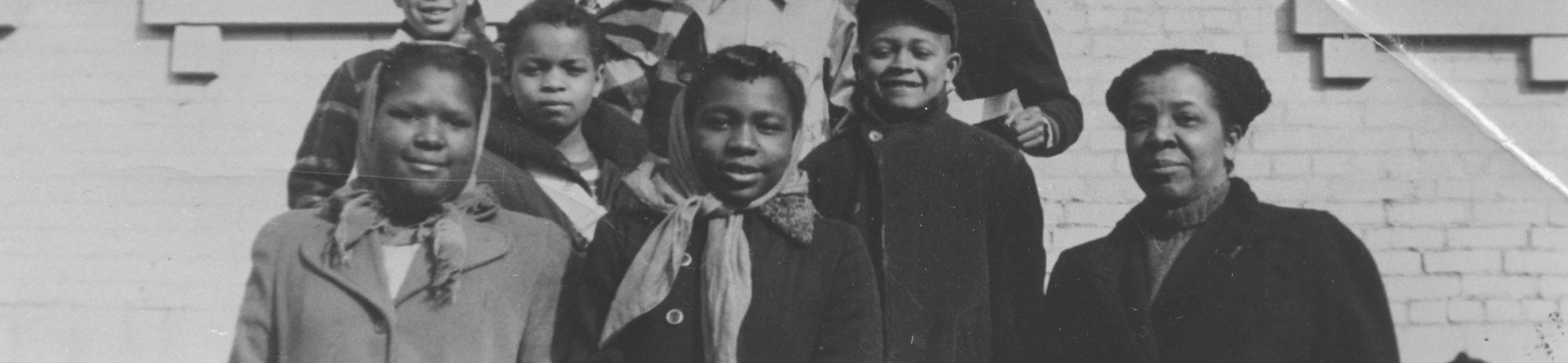
The African Americans who came to work for the Albion Malleable Iron Company during World War I found housing near the factory on the west side of town. When their children followed, the city faced a dilemma. Where would the Black children go to school? The West Ward Elementary School was the closest neighborhood school. Since 1873, West Ward had been the school for immigrant children whose fathers worked at The Malleable or the nearby Gale Manufacturing Company. At first, the newly arrived African American students were educated in black church facilities. In January 1918, Dalrymple, a new elementary school, was dedicated. Dalrymple School was in the same general neighborhood as West Ward. An agreement was reached to send the white children, who had been attending West Ward, to Dalrymple and convert West Ward into an all-Black elementary school. Albion’s growing Black community supported this arrangement. Why did they do that? The only way there would be Black teachers was under this arrangement. These families and their children had lived in the South where the segregated Black schools had Black teachers. Thus, this bargain for a segregated elementary school in Albion was implemented in 1918. As the post-World War II civil rights era emerged, African American parents began to question this arrangement. In 1953, Black parents in tandem with the NAACP, boycotted West Ward, forcing the Albion Board of Education to close the school that October. Segregation was considered a solution rather than a problem in 1918; by 1953, segregation was indeed perceived a problem, which was confronted through Civil Rights resistance. Following the closure, most West Ward students transferred to Dalrymple Elementary School.
This chapter of Albion’s history has been highlighted through historical displays in Holland Park, the location of the West Ward School which was demolished in 1958, and through an oral history project that included 20 interviews of former West Ward students. The interviews are available to the public at www.albionwestward.net. Following West Ward’s closure, a couple of the Black teachers were blended into the Albion Public School system, but no effort was made to hire additional African American teachers for Albion Public Schools. The West Ward School story reminds us that Black Teachers Matter.
Fast forward to the late 1960s. By this time, Albion’s African Americans made up approximately 25% of the city’s population of 12,000. Excepting Mildred Biggs, who had taught for years at West Ward, there were no African American teachers in the Albion Public School system. Racial tensions erupted at Albion High School. The absence of Black teachers was an issue. Albion School administrators came up with a plan. Albion would look to the South to the Historically Black Colleges and Universities (HBCUs). Recruiting trips were made and a cohort of Black teachers were recruited to Albion from Louisiana, Arkansas, and Georgia, from Grambling University, Fort Valley University, and Arkansas A & M. Beginning in the early 1970a, Mae Ola Dunklin, Eddie Williams, Barbara Davis, Hazel Lias, Ray Lias, Vivian Davis, Sara Truss, Dorothy Perkins, Richard Powell, and Sylvia Powell were among the African American teachers that were recruited to Albion from the South. In that same era, the Albion Public Schools also hired some Albion natives, grandsons and granddaughters of the first wave of the Great Migration. These included Robert Wall, Ron Gant, Tonya Lee, and Lenn Reid. From 1970 until 2000, Albion Public Schools’ teaching staff included a significant number of Black teachers. In the 21st Century, that generation of African American Albion Public School teachers retired. They were not replaced by Black teachers. Albion’s teaching staff again resembled the pre-1918 all-white faculty. Meanwhile, Albion’s school system was facing a variety of challenges. Albion, a model of industrialization for more than a century, became a model of deindustrialization as one after another of Albion’s factories closed their doors. For decades, Albion has been confronted with the shock of lost employment opportunities. This has meant decreased tax revenues for schools, a loss of population, and an intensification of poverty among the remaining citizenry. Added to this, Michigan adopted Schools of Choice options. Albion began to lose children to the schools of neighboring communities. No doubt, a variety of motives influenced those who chose to leave the Albion Public Schools, but a pattern of white flight meant that the Albion Schools were becoming more and more Black, more and more meeting the definition of a segregated school system. As the Albion Public School enrollment declined and the school debt increased, the decision was made to close Albion’s high school. An agreement to collaborate Marshall High School was reached in 2013. Henceforth, Albion High School students were welcomed at Marshall. Soon after, Albion’s Middle School students were transferred to Marshall and, in 2016, Albion voters agreed to have the Marshall School District annex the Albion School District. Albion High School and Middle School students were bused to Marshall. Harrington Elementary School is the one remaining school in Albion, but it is administered by Marshall Public Schools.
Albion’s community remains diverse. The 2010 census lists Albion’s African American population at 32%. For more than a century, Marshall, Michigan has been known as an almost lily-white town. For the past century, the central stories of Albion and Marshall could be characterized as the “tale of two cities.” Marshall’s annexation of Albion’s schools is, thus, not without irony. Albion’s Harrington Elementary School remains heavily African American and meets most definitions of a segregated school. Although the current principal at Harrington Elementary School is African American, the teaching staff is almost all white. And Albion’s African American students attending Marshall Middle School and High School do not find Black teachers. Thus, in 2019, Albion and Marshall face a challenge of having their teaching faculty represent their student body. Black Teachers Mattered in 1918, Black Teachers Mattered in 1970, and Black Teachers Matter in 2019. The diminution of the number of Black teachers is a national problem and the decreasing number of Black teachers are in demand. This circumstance makes it easier for school administrators to acknowledge the need for diversity among the faculty and, in the same breath, announce that Black teachers are very hard to find.
The “Black Teachers Matter” Oral History Project aspires to document Albion’s initiative in recruiting African American teachers from the Historically Black Colleges and Universities in the American South in the early 1970s. Coincidentally, African American teachers from Albion were hired and their stories will also be recorded. For those teachers who grew up in the South, interviews will explore life in the South, racism, segregation, the civil rights movement, the experience at an HBCU, introduction to an Albion Public School representative, the decision to travel north, the arrival in Albion, racism and segregation in Albion, teaching in Albion Public Schools, perceptions of Albion’s school situation following the annexation by Marshall, and continuing community involvement as mentors and consultants.
This project will explore related themes with the Albion Black teachers who grew up in Albion or in the North to portray the diversity dynamics in Albion Public Schools with a focus on the late 1960s and the 1970s. This will require a systematic review of the Albion Evening Recorder (available on microfilm at the Albion District Library Local History Room) to provide context for the portraits of the teachers. The plan will be to participate in the Antioch Oral History Workshop in July, begin archival work at the Albion District Library Local History Room in August, and initiate the oral history interviews in September. Leslie Dick, historian, archivist, videographer, editor, and oral history interviewer will be assisting on this project and her participation at the Antioch Workshop would be invaluable.
The goal of the project will be to tell the story of the Albion Black teachers and to share their stories with the community, giving history its due. An additional goal is to remind the Marshall School District that Black Teachers Matter and to demonstrate the steps taken by Albion 50 years ago to assure that there were African American teachers. Could Marshall take similar steps in 2019? Marshall can learn from this history, contributing to a necessary conversation on the need for Black teachers today.
How will this project be applied to an Albion College class? Since 1997, Wesley Arden Dick (with the help of Leslie Dick, former Director of the Albion Public Library History Room), has taught an Albion College First-Year Seminar entitled “A Sense of Place: Albion and the American Dream.” The class is focused on the history and the current status of the community of Albion. Currently, in the class, students read the oral histories from the West Ward School Project. The “Black Teachers Matter” Oral Histories will be assigned and discussed with next fall’s first-year seminar students. The introduction to these students of the oral histories will serve as an example for them to emulate as they interview an individual from Albion. In addition, Albion College’s Education Department will also find this oral history project valuable. The Albion College Education Department is working to produce a more diverse group of future teachers. This project can illuminate the challenges, obstacles, and opportunities confronted by the Albion community in the past and today.
To conclude, “Albion’s Story is America’s Story.” This oral history project is tied to the rich history of the Great Migration of African Americans from the South to the North. Its focus is on a Great Migration wave that brought African American teachers to Albion from the Historically Black Universities and College in the 1970s. Those teachers taught in Albion for 40 years and more before retiring. In retirement, they have remained dedicated to their profession and to the children of Albion. Theirs is a remarkable story, one worth preserving and sharing. Those retired teachers are getting up there in age, giving urgency to the recording of their stories. Albion’s example of action by going to the South to recruit African American teachers in the 1970s is also timely given that today’s Marshall Public School teaching faculty is not diverse. Black teachers mattered in Albion’s past. The “Black Teachers Matter” Oral History Project is designed to inform Albion about its rich history and to inform the Marshall School District about actions taken in the past to create a teaching faculty that looks like its students.
Community Partnerships
Public Schools and education remain a central concern and priority among Albion’s citizens. Many retired Albion Public School teachers remain engaged in mentoring and educational support. Outstanding in this have been retired African American teachers who graduated from HBCUs. These teachers are also active in the Albion Branch NAACP. The Albion Branch NAACP is invested in the Albion-Marshall School experience. The Branch supports Albion preserving its history and understands that the past can inform the present.
The proposed oral history interviews are former teachers who reside in Albion, making this a community-based endeavor. The history that is recorded will be valued by Albion citizens, the Albion College Education Department, and the Marshall Public Schools.
The Albion District Library Local History Room houses archival resources. The Local History Room and Albion College will provide space for oral history interviews.
Oral History Methodologies
This project envisions formal interviews of approximately 10 key subjects, African Americans who taught in Albion Public Schools in the 1970s. Some of this group will be from HBCUs and from the South. Others will be teachers who are descendants of African Americans who arrived in Albion through an earlier Great Migration wave. Wesley Arden Dick will prepare questions that apply to all, leaving room for uniqueness and spontaneity. Interviewees will be invited to share photos and archives that enrich their oral narrative. The digitized oral histories will be shared online, along with a written biographical narrative.
Wesley Arden Dick has experience as an oral history interviewer. Leslie Dick will be invited as a partner, bringing social skills as well as photographic, recording, and web design skills. Wesley Arden Dick, Leslie Dick, and Robert Wall received a Michigan Humanities Council Heritage Grant in 2015 to undertake the West Ward School Oral History Project. That project included more than 20 formal oral histories, a permanent display of photographs in Albion’s Holland Park, and a website that includes essays and the digitized oral histories.
Pedagogical Considerations
This project, “Albion, Michigan Public Schools: Black Teachers Matter—a History,” is meritorious on several levels. For a GLCA classroom, it is directly applicable to the first-year seminar, “A Sense of Place: Albion & the American Dream.” The class is focused on Albion’s community history and story. Race and ethnicity are central to an understanding of Albion’s history. Focusing on “Black Teachers Matter” will introduce students to the Great Migration as it has impacted Albion, with an emphasis on Albion’s public schools. To comprehend the Albion story in a broader context, the 2019 students will view the Stanley Nelson film, “Tell Them We Are Rising, the story of the Historical Black Colleges and Universities” and they will read selections from the Pulitzer Prize winning book, Isabel Wilkerson’s The Warmth of Many Suns, the Epic Story of America’s Great Migration. This film and book will supplement Albion specific sources, such as Judy Powell’s An Ethnic History of Albion and the Albion Evening Recorder. In years past, students in this class have viewed, written about, and reported on oral histories of Albion World War II veterans and of West Ward School alumni. In years past, students in that class have occasionally interviewed people from the community of Albion. For the coming semester, this project proposes to give the students access to the “Black Teachers Matter” oral history to introduce them to the knowledge that can be learned from such recorded interviews. When we travel to Washington, D.C. with the class, students can compare the “Black Teachers Matter” oral histories with oral histories at the Washington, D.C. history museums, including the Smithsonian Museum of African American History and Culture. During the semester, the students will meet in person, many of the those interviewed for the “Black Teachers Matter” oral history project. Students will be able to bring up matters that were unanswered or which remained mysterious in the recorded interviews. For a hands-on project our students will interview Marshall high school or Albion college students at Albion College with a focus on “Black Teachers Matter.” These recorded interviews will take place during the fall semester of 2019.
Qualifications of the Applicants
Wesley Arden Dick is the senior Albion College faculty member. In partnership with Robert Wall and Leslie Dick, he directed the Michigan Humanities Council Heritage Grant (2015-2016) that culminated with the oral histories of 20 West Ward School alumni, a permanent photo historical display on history hill at Holland Park in Albion, and with a West Ward website that features essays and the oral history interviews. Upon completion of the MHC Heritage Grant, the MHC invited the Albion team to apply for a community dialogue grant. The Albion proposal for a community dialogue centering on the importance of Black teachers was accepted by the MHC and completed in 2018. Professor Dick is Second Vice President of the Albion Branch NAACP and has been active in the work of the Albion NAACP and in Albion Civil Affairs.
Leslie Dick, retired Director of the Albion District Library, is a historian, archivist, and author with experience in directing and coordinating oral history projects, e.g., Albion Veterans Oral History Project and the MHC West Ward School oral history project. Leslie is skilled in digital and computerized technology.
In 2018, Albion College bestowed honorary doctor of humanities degrees on Wesley Arden Dick and Leslie Dick for their contributions to the community.
Robert Wall, retired as teacher and administrator from Albion Public Schools and a former student in Albion Public Schools, as well as co-director of the MHC West Ward School oral history project, will be consulted for the “Black Teachers Matter” oral history project.
Akaiia Ridley, who grew up in Albion, attended Albion Public Schools, graduated from Marshall High School, is currently finishing her first-year at Albion College. She was selected as a Build Albion Fellow, a prestigious and innovative program designed to attract Albion-area students to Albion College. She was an outstanding student in last fall’s “A Sense of Place: Albion & the American Dream” seminar. With deep roots in the community and aspirations as a historian, Akaiia will be introduced to the “Black Teachers Matter” oral history project and mentored regarding archival and oral history techniques.
Project Outcomes and Deliverables
In August, archival research at the Albion District Library Local History Room will firm up the Albion context for the recruitment of Black teachers from the South and the HCBUs as well the hiring of Black teachers from Albion and Michigan. Interviews with African American teachers will take place in September. These digitized oral histories will be available for use in the Albion College first-year seminar, “A Sense of Place: Albion & the American Dream.” In partnership with the Albion Branch NAACP, a public community event highlighting the “Black Teachers Matter” oral histories will be held during Black History Month 2020. The oral histories will be made internet accessible during the 2019-2020. The project will enrich the academic experience of the “Albion & the American Dream” seminar students and the “Black Teachers Matter” oral histories will enrich the community of Albion’s understanding of its past. Albion College Education Department faculty and students will be exposed to an important dimension of Albion’s public school’s history and Marshall Public School administrators and teachers will acquire a deeper sense of the history of the school district that they recently annexed.
An estimated 10 digitized interviews will be considered for www.ohla repository. The director, Wesley Arden Dick, is responsible for two reflections for the OHLA hub as well as for a final case study of up to three pages.
No other funding sources are supporting this project.
Summary and Conclusions
Students in “A Sense of Place: Albion & the American Dream” engage in a semester study of Albion, Michigan. Diversity is central to Albion’s community story. Albion Public Schools are an important dimension of Albion’s racial and ethnic history. This oral history project is community based and will enrich the experience of the students in the seminar as they learn about Albion’s connection to the Great Migration was related to the need for Black teachers in the Albion Public Schools. Students will view and reflect on the oral histories of the Black Teachers and meet them personally in class. Because Albion and its new partner, the Marshall School District, find themselves with a significant Black student count and an insignificant Black teacher count, this “Black Teachers Matter” oral history project can contribute to a conversation with Marshall’s Public School Administrators and the Marshall School Board concerning actions and initiatives needed in 2019-2020 to create a teaching faculty that looks like its students.